Baby Steps
cw: pregnancy, physical/hormonal/emotional changes

I’m pregnant, and the algorithm knows it. If this news comes as a surprise to you then psych! I have been pregnant for quite a while now - at time of writing, I am 31 weeks, meaning I am approximately three-quarters of the way there. While hardly a secret, I have not felt moved to make any kind of social media announcement on the matter (my vaguely superstitious feeling is that this is the kind of news that disseminates itself organically to those who are interested in knowing), and this is not really an announcement either, merely context.
So, the algorithm: obviously I have been more likely to gravitate towards pregnancy and baby related posts over the last months, so this is no surprise, but there is a particular genre of post of which I have Had Enough. Namely, the Pregnancy-as-Unholy-Body-Horror post. I will not link to the latest extremely viral example of the form, but suffice to say that it and the dozens of other examples I have come across in the past months consistently act as lightning rods for people who have given birth to come and pour out the worst, most extreme things that happened to their bodies, rallying under the banner of “nobody told me this could happen”. My perhaps controversial view is this: don’t bring that shit anywhere near me.
The scrolling blur of popped hips, prolapses, permanently altered ribcages, expanded feet, lost teeth, temporary blindness, haemorrhages and more engenders a kind of transfixed, hypnotised panic in me. I know that on one level this is the medium rather than the message - in the online portal, these outpourings coalesce unplanned out of a few casual, often flippant words. But the medium is also intrinsically part of the message, the pettier human motives that bubble alongside women’s desire for an outlet for their experiences: competition, morbid curiosity, the savage satisfaction that if something happened to fuck you up, at the very least someone else can be grossed out by it. And here with the added irresistible ingredient of self-righteousness, of feminist solidarity: no one ever teaches you this stuff! No one ever tells you all the ways pregnancy can go wrong or be dangerous, because if they did they know women would never do it.
First and foremost, I wonder if this is true. In the excellent book Matrescence by Lucy Jones, she talks about how for a long time there was a soft pressure not to discuss the possibility of vaginal or anal tearing during birth for fear that people would begin to opt overwhelmingly for caesarean sections - but when pregnant people were calmly informed of these possibilities, this did not happen. Which is to say: a large number of us are going in with our eyes open to the bloodier aspects of the business and saying yes anyway for the broadest imaginable spectrum of reasons. Pregnancy, like many things, is a calculation of acceptable risk.
Secondly, they don’t tell you every single complication or danger or even symptom that can arise from pregnancy because there are too fucking many of them and most of them are extreme outliers. There is apparently a woman on TikTok who updates a list of pregnancy symptoms regularly: it currently stands at over a thousand. Every week I receive an email from the NHS with information and pictures about what my baby is likely up to in the sealed room of my uterus1, along with lists of symptoms I may be experiencing. I look forward to these emails very much, partly as a milestone (another week gone) and partly because there is always a slightly desperate comparison to a fruit or vegetable to describe the baby’s size (a cabbage, says the NHS this week - a savoy cabbage, corrects a different email newsletter triumphantly - a starfish, says an app, like a fucking weirdo). But I usually give the symptoms list only a cursory glance. It currently stands at twenty-three items - that’s twenty-three possible things happening to your body that the NHS deems common enough to remind you of on a weekly basis. I find that overwhelming enough, those relatively trivial bullet points! I really wonder what good it does to add a thousand further possibilities, each more debilitating and also more unlikely than the last. I would venture that calculated ignorance is part of the calculated risk.
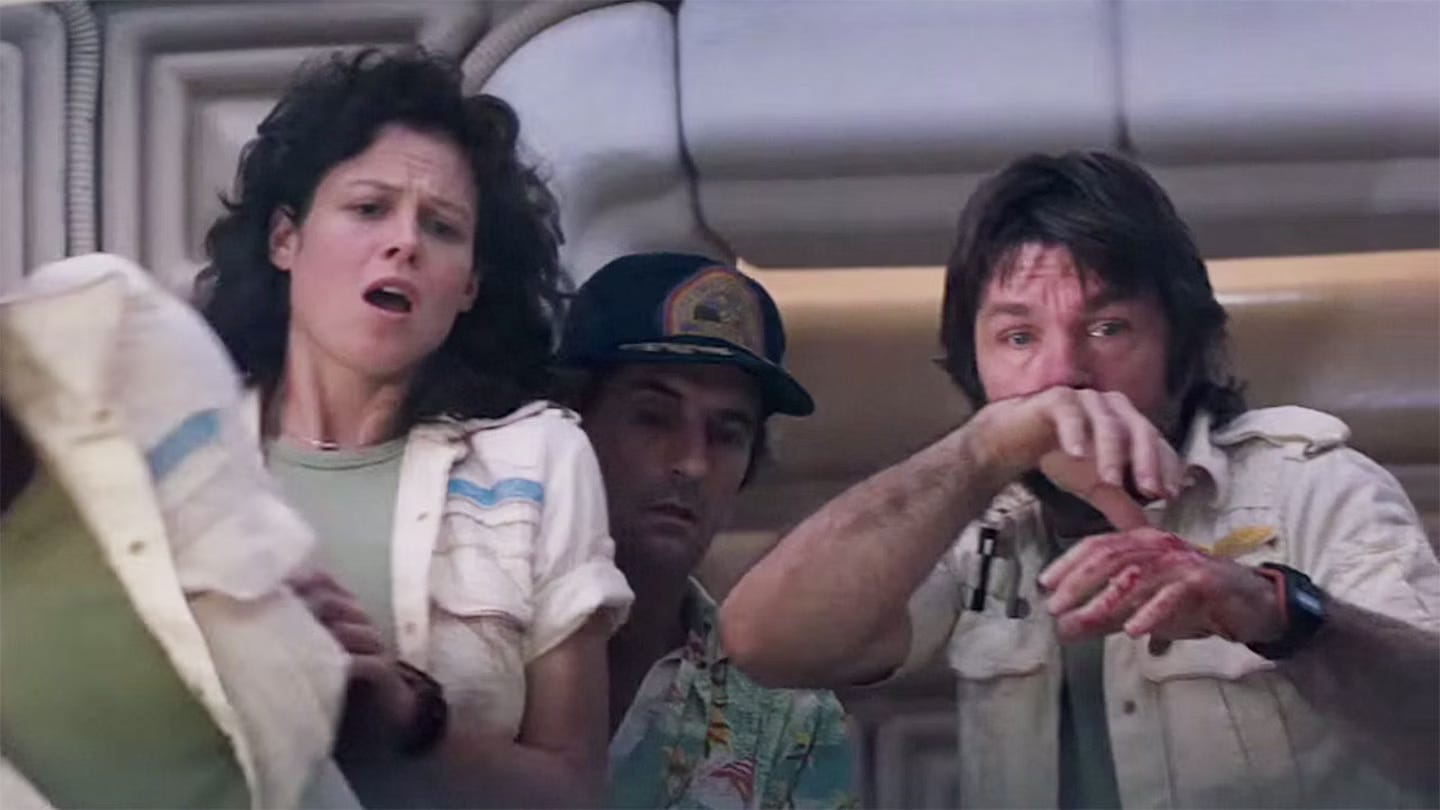
Because (thirdly) - and I can only speak for myself here - I simply do not want to know every single thing that could go wrong. You might deduce from my stance that my pregnancy has been relatively uncomplicated, and in medical terms, this is true - so far no additional risk factors beyond high BMI2 which yields me a slew of extra check-ups that merely raise the level of care to what should be available to everyone, not just those who check a box. But even an uncomplicated pregnancy is hard enough: uncomfortable, difficult, strange, sometimes painful, requiring hundreds of micro-adjustments to the way I eat, sleep, plan, work, and go about my life. (As so many before me, my pro-choice conviction has hardened into diamond: I opted for this - to force someone to go through it against their will seems extraordinarily evil.) While I fight for my equilibrium, my dignity, my resilience, and in turn know that the preservation of these things is probably the best thing I can do for the baby (attend to your own oxygen mask first), I do not need to add the threat of extreme possibilities to the anxiety soup. It feels parallel to the popularity of various health data tech that measures things in your body that most of us simply don’t need to know and lack the expertise to interpret3, or even the prurient voyeurism of true crime framed as feminist ‘personal safety’ concerns.
But more than this: I also know from experience that the worst, most outlying possibilities can happen. You can find yourself in the minority percentage of outcomes through chance alone, bewilderingly cruel, devastatingly unlucky. Daily, I balance excitement with shoring myself up against disaster, which is to say, practicing powerlessness. I think the scrambling impulse to inform, to list a thousand possibilities, is talismanic in a sense, a contemporary ward against evil. Surely if I am aware of a bad thing, it cannot happen to me? But it can, it could.
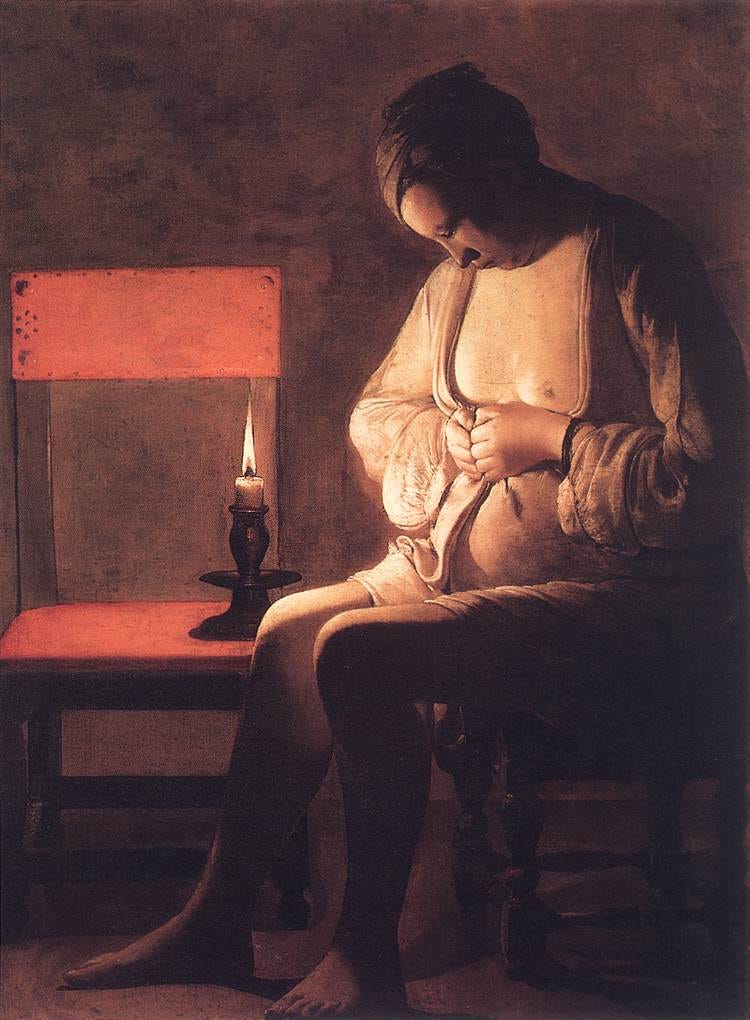
In the latest viral thread, the author specifically compares pregnancy to body horror, clarifying their definition of it: crucially, not that the body becomes horrifying to others, but that the experience of your body being changed by external forces/beyond your control is itself horrifying. It is a variation on my well-worn joke when I inform people of some new development in my pregnancy: “this whole process is deeply unnatural”. It is a joke based vaguely in scientific fact - that human beings have evolved away from being ‘good’ at giving birth, our developed brains needing longer gestations and bigger heads, our upright stances shifting and narrowing our pelvises. I view it as the wages of knowledge, a kind of atheistic parallel to Genesis where Eve’s punishment for disobedience is labour pain; if we too want sapience, the knowledge of good and evil and truth and consciousness, then we acquire it at a difference from other mammals.
In the swirl of hero’s journey, of myth and theology and feminism and yes, probably, Catholicism that have formed parts of my psyche, this makes sense to me. This gives a meaning to what is, in my first pregnancy, a largely faith-based endeavour, characterised for me by the terror and thrill of not-knowing. That is the thing I have said to most people over and over again - here are my plans for the birth, for after the birth, but these are good guesses at best. I simply do not know how this is going to be. In Matrescence, Jones talks about how much of obstetric care even into the 20th century was informed by the idea that labour pain must have a utility or a purpose, a scientific translation of Christian morality - while dispiriting (these beliefs persist to this day and are partly responsible for a resurgence in the idea of ‘natural childbirth’ as meaning birth with no form of intervention or painkillers), I interpret this more broadly as a desire to construct meaning out of pain. If something hurts so much, it must be for something.
It is a concept that applies far beyond birth. It is present in grief, disappointment, heartbreak, all forms of suffering. Surely this thing I am feeling serves a purpose. But the hardest thing we face in our lives is that pain often does not have a secret meaning to it. Suffering begets suffering, hurt people hurt people, suffering doesn’t make you good, it just makes you suffer. I, personally, am satisfied by constructing a sense of quest, a sense of venturing into the unknown to return with a great prize, because it keeps me going. I want to bring a longed-for child back from the dark woods so that my partner and I can love them, raise them, make bigger a family that I hope can leave the world better than how we found it. In this light, the changes to my body - the wild, mad things I am learning about myself every week (why am I short of breath? because my organs are rising up in my body to make space for the baby and pressing on my lungs! why are my gums bleeding more when I brush my teeth? because the volume of blood in my body has doubled!) - are fascinating. Still uncomfortable or unpleasant (I had nausea until 21 weeks, which was both isolating and debilitating), or sometimes just boring (I don’t really care if you are enjoying the sun, I wish it to be 15°C max so I can stop sweating through every outfit), still strange and sometimes frightening, but christ so interesting, so new, so unique that “horror” alone, even the most academic definition of body horror, does not seem to fit with my experience.
Indeed, the horrors I experience and anticipate are not within me but without me. I fear the world more than my own body (perhaps living in a fat body has prepared me for this - my own neutrality towards the form that carries me is at odds with the world’s treatment of it). I fear myself, my ability to raise a child without screwing them (or me) up. I fear losing my much-fought-for wholeness and resilience. I fear being pinned down into identities that are not my own, professionally and personally. I fear what will happen to my career, my ability to write, take meetings, think freely and purely about a project without distraction. In short, I fear becoming a mother in my whole self far more than I fear the physical act of it. This to me is a harder kind of horror to articulate because it is not as measurable or medical (though of course does have a physiological component in that post-natal mental health is a chemical and hormonal issue as well as a psychological one), and one that - as far as I can tell - we have simply never answered. The question of how to become a mother or any kind of parent is one where we are still guessing, still groping for handholds, still desperately tossing out suggestions, writing, opinions, forming and reforming our ideas every few years since the beginning of time. I wonder if a little of the memetic appeal of the ‘body horror’ of pregnancy is that it is in a sense more concrete than the darker pathways that wait beyond it, the weird hinterland of never knowing if you are doing the right thing.
One last thing. Throughout this, I have referred to both “pregnant people” and “pregnant women”. It is an imperfect and clumsy solution to the fact that birth is inevitably, intrinsically gendered in the way we construct our cultural ideas around it, and yet I and many others feel more comfortable referring to ourselves in the first category. For me, this is not only a question of gender (an intricate subject in itself that I have dwelt on a lot over the past months) but a philosophical one too: all those who give birth are pregnant people, and it is the removal of this personhood that lies at the root of the failings and inadequacies that come with it. There is a practicality to it: I do not wish anyone, for a single second of my life, to lose sight of the fact that I am a person, nor for anyone to think for a single second that pregnant people are not members of the society we inhabit and build together (as are children, to touch upon another tediously frequent Twitter topic). For a better world, pregnancy needs to be both neutral and widely interesting to all, both those who will and will not experience it - it is not rainbows and flowers, but it does not then need to become a condemnation to horror either, neither a horror constructed by others, nor a horror imposed upon the self. I wish I had known more before my pregnancy, but not necessarily about My Changing Body™; I wish I had known that the lives of pregnant people are intrinsically bound to my own, that there is such an intellectually fascinating wealth of thought out there about pregnancy, and above all that I have an investment as a person in this thing that occurs - as they say - every minute, and differently each time.
Escape womb. (Sorry.)
Disclaimer for BMI obviously being a bullshit indicator of anything.
A thing that has driven me mad before and during this pregnancy: now I get test results from the hospital on the MyChart app, the raw data is often sent through before a clinician has actually looked at it. Often there are results outlying the ‘normal range’, which send me into a frenzy of panicky googling - until a message flashes up a day or so later: all normal, no concern, or some variant thereof. Raw data tricks us into thinking there is a universal baseline for our bodily formulas, instead of each individual case being highly contextual and specific. We are all different, kumbaya.
Lovely piece - and congratulations Raf! ❤️